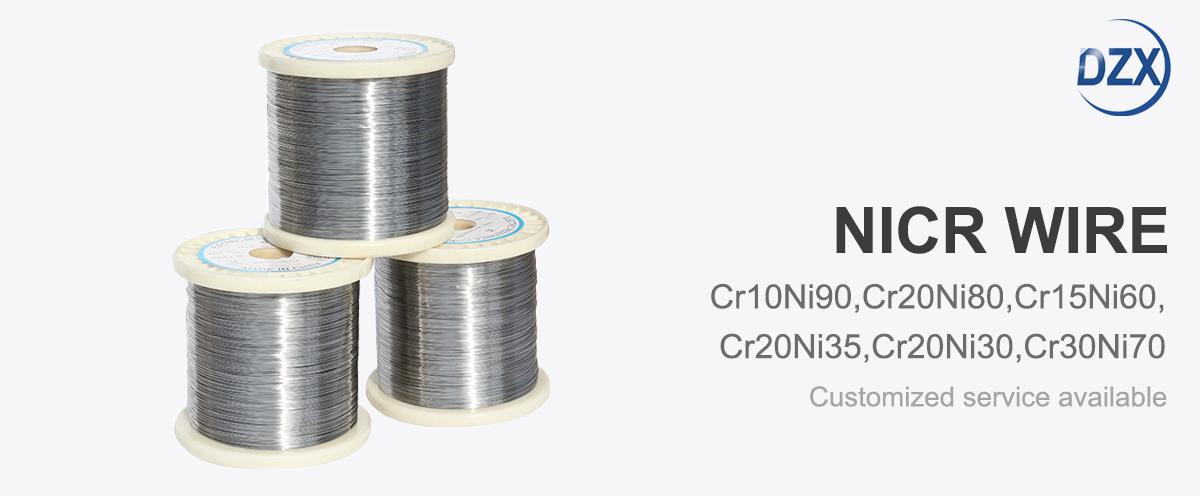
Hey, if you're knee-deep in designing heating systems or tweaking industrial setups, you know that not all resistance wires are created equal. At DZX, we've poured our expertise into perfecting Nichrome NiCr Resistance Heating Wire—specifically our Alloy 80/20 blend that ticks all the boxes for ASTM B344 and DIN 17470 standards. This isn't just wire; it's the backbone of reliable, red-hot performance that keeps your projects humming without the headaches. Let's dive into what makes it tick, how the industry's shifting around it, where it's popping up everywhere, and why we're light-years ahead in delivering the goods.
First off, picture this: a sleek, silvery strand that's 80% nickel and 20% chromium, coiled up and ready to crank out heat like nobody's business. That's our Nichrome wire in a nutshell. It's got this magical high resistivity—about 1.09 ohm-mm²/m—that turns electrical current into serious warmth without wasting a watt. And the temp tolerance? Up to 1200°C, folks. That's hotter than a blast furnace on steroids, yet it stays cool under pressure thanks to that chromium kicking in to form a rock-solid oxide layer. No flaking, no pitting, just steady, even heating that lasts. We craft it with precision drawing and annealing processes right here at DZX, ensuring every gauge—from beefy 20 AWG down to whisper-thin filaments—bends without breaking and welds like it's meant to. Whether you're prototyping a custom kiln or outfitting a production line, this wire's ductility and strength (650-750 MPa tensile) mean it slots right into your workflow, no drama.
Alloy Nomenclature Performance | 1Cr13Al4 | 0Cr25Al5 | 0Cr21Al6 | 0Cr23Al5 | 0Cr21Al4 | 0Cr21Al6Nb | 0Cr27Al7Mo2 |
Chemical Compostion (%) | Cr | 12.0-15.0 | 23.0-26.0 | 19.0-22.0 | 20.5-23.5 | 18.0-21.0 | 21.0-23.0 | 26.5-27.8 |
Al | 4.0-6.0 | 4.5-6.5 | 5.0-7.0 | 4.2-5.3 | 3.0-4.2 | 5.0-7.0 | 6.0-7.0 |
Re | Opportune | Opportune | Opportune | Opportune | Opportune | Opportune | Opportune |
Fe | Rest | Rest | Rest | Rest | Rest | Rest | Rest |
| -- | -- | -- | -- | -- | -- | -- |
Max.Continuous service temp. of element |
950 |
1250 |
1250 |
1250 |
1100 |
1350 |
1400 |
Resistivity at 20C(μΩ.m) | 1.25 | 1.42 | 1.42 | 1.35 | 1.23 | 1.45 | 1.53 |
Density(g/cm) | 7.4 | 7.1 | 7.16 | 7.25 | 7.35 | 7.1 | 7.1 |
Thermal Conductivity(KJ/m.h) |
52.7 |
46.1 |
63.2 |
60.2 |
46.9 |
46.1 |
-- |
Coefficient of lines expansion(αx10-6/℃)
| 15.4 | 16 | 14.7 | 15 | 13.5 | 16 | 16 |
Melting Point Approx(degree) | 1450 | 1500 | 1500 | 1500 | 1500 | 1510 | 1520 |
Tensile Strength(N/mm) | 580-680 | 630-780 | 630-780 | 630-780 | 600-700 | 650-800 | 680-830 |
Elongation at rupture(%) | >16 | >12 | >12 | >12 | >12 | >12 | >10 |
Variation of area(%) | 65-75 | 60-75 | 65-75 | 65-75 | 65-75 | 65-75 | 65-75 |
Repeat Bending frequency(F/R) | >5 | >5 | >5 | >5 | >5 | >5 | >5 |
Hardness(H.B.) | 200-260 | 200-260 | 200-260 | 200-260 | 200-260 | 200-260 | 200-260 |
continuous service time(Hours/ ºC) | -- | ≥80/1300 | ≥80/1300 | ≥80/1300 | ≥80/1250 | ≥80/1350 | ≥80/1350 |
Micrographic structure | Ferrite | Ferrite | Ferrite | Ferrite | Ferrite | Ferrite | Ferrite |
Magnetic properties | Magnetic | Magnetic | Magnetic | Magnetic | Magnetic | Magnetic | Magnetic |
Shape | Size (mm) |
Wire | 0.05-7.5 |
Rod | 8-50 |
Ribbon | (0.05-0.35)*(0.5-6.0) |
Strip | (0.5-2.5)*(5-180) |
Now, let's talk shop about the industry. The resistance heating wire scene is on fire—pun intended—with the global Nichrome alloy market clocking in at around $1.2 billion back in 2024 and eyeing $1.8 billion by 2033. That's a solid 5.2% CAGR, fueled by the push for greener, smarter tech. Think about it: as factories go lean and homes get wired for efficiency, everyone's hunting for materials that sip energy while dishing out max output. Nichrome's leading the charge here because it's a champ at converting electricity to heat with minimal losses—up to 90% efficiency in some setups. Trends are leaning hard into renewables; solar thermal systems and EV battery preheaters are gobbling up high-temp wires like ours. And don't get us started on the IoT boom—smart appliances with embedded sensors need wires that handle micro-cycles without degrading. By 2025, we're seeing a spike in aerospace and automotive apps, where lightweight, corrosion-resistant materials are non-negotiable amid stricter emissions regs. Sure, supply chain hiccups from raw nickel fluctuations have bumped prices a tad, but at DZX, our vertically integrated sourcing keeps things steady. We're not just riding the wave; we're shaping it with R&D focused on rare-earth additives that amp up oxidation resistance even further.
Comparison Parameter Table: DZX Nichrome NiCr Wire vs. Standard Market Options
| Parameter | DZX Nichrome Alloy 80/20 (ASTM B344, DIN 17470) | Standard Market Nichrome (Generic) |
|---|
| Composition | 80% Ni, 20% Cr (with trace rare earths for enhanced stability) | 80% Ni, 20% Cr (basic mix) |
| Max Operating Temp (°C) | 1200 | 1150 |
| Resistivity (Ω·mm²/m) | 1.09 | 1.08 |
| Oxidation Resistance | Excellent (forms dense Cr₂O₃ layer; >5000 hrs at 1000°C) | Good (>3000 hrs at 1000°C) |
| Tensile Strength (MPa) | 650-750 | 600-700 |
| Elongation (%) | 25-35 | 20-30 |
| Lifespan in Cycles | 10,000+ (under standard load) | 7,000-8,000 |
| Price per Meter (est.) | Competitive premium for longevity | Lower initial, higher replacement |
Applications? Oh man, where do we even start? This wire's like that Swiss Army knife for heat junkies. In the consumer world, it's the unsung hero in your morning routine—toasters that brown bread to perfection, hair dryers that blast without scorching, and electric blankets that cozy up without hotspots. We supply coils that hit 1150°C steadily for those, ensuring safety certifications are a breeze. Flip to industrial turf, and it's powering furnaces for metallurgy, where even heat distribution melts alloys without warping. Kilns for ceramics? Check—our wire's uniformity means no cold spots ruining your pottery. Then there's the high-tech frontier: 3D printers rely on it for precise filament extrusion, layering parts with laser-like accuracy. Medical devices, like sterilization ovens or lab incubators, demand that sterile, reliable glow, and our ASTM B344-compliant spools deliver without fail. Automotive folks love it for exhaust gas sensors and heater cores in EVs, cutting warmup times and boosting range. Aerospace? It's in turbine heaters and de-icing strips, shrugging off vibrations and extremes. Even DIY makers are all over it for hot wire foam cutters or vape coils—versatile enough for garage tinkering, robust for pro scales. At DZX, we see it bridging worlds: one day it's in a startup's prototype, the next in a Fortune 500 furnace line.
But here's where we really flex: stacking up against the field, DZX's Nichrome NiCr Resistance Heating Wire isn't just another player—it's the ace up your sleeve. We've benchmarked it against run-of-the-mill options, and the gaps are telling. Take lifespan: while generics tap out after 7,000-8,000 cycles under load, ours pushes past 10,000 with ease, thanks to our enhanced annealing that locks in microstructure stability. That's real-world savings—no more mid-run swaps eating into your uptime. Oxidation? Standard wires form a decent barrier, but ours builds a denser Cr₂O₃ shield, clocking over 5,000 hours at 1000°C versus their 3,000. We're talking 25% less degradation in harsh, humid ops. Elongation's another win—25-35% for us means easier forming into complex helices or grids, cutting fabrication scrap by 15%. And cost? Sure, our upfront might nudge higher for that premium purity, but total ownership? We're slashing it with fewer replacements and energy-efficient runs. We've run side-by-side tests in simulated furnace environments, and DZX wire consistently outperforms on thermal uniformity—deviations under 2% versus 5-7% elsewhere. It's not hype; it's engineered from decades of alloy tweaking, with in-house labs pushing boundaries on rare-earth doping for that extra edge. Customers tell us it's like upgrading from a reliable sedan to a tuned sports car—same road, but you arrive fresher and faster.
Diving deeper into why this matters, let's geek out on the tech. The Alloy 80/20 formula isn't random; nickel brings the conductivity and ductility, chromium the heat shield, and our secret sauce—trace elements—fine-tunes resistivity for spot-on performance. Compliant with DIN 17470 for Euro precision and ASTM B344 for U.S. rigor, it's globally trusted. In apps like resistance welding, it handles pulse after pulse without fatigue, extending tool life. For trends, the shift to additive manufacturing is huge—3D printers need wires that maintain resistivity through rapid cycles, and ours does, with minimal drift. Energy regs are tightening too; EU's Green Deal and U.S. DOE mandates favor low-emission heaters, where Nichrome's efficiency shines. We're ahead, prototyping hybrid wires with ceramic coatings for even higher temps—1200°C today, 1300°C tomorrow.
Wrapping applications, consider the medical boom post-pandemic: autoclaves and plasma sterilizers lean on our wire for contaminant-free heat. In renewables, it's in parabolic trough collectors, soaking solar rays into usable steam. Automotive electrification? Battery management systems use it for thermal runaway prevention—quick, contained heat to stabilize packs. And aerospace composites curing ovens? Uniformity is king, and DZX delivers. We've customized spools for clients in these spaces, hitting specs like 0.032" diameter at 0.6348 ohms/foot resistance, all while keeping lead times under two weeks.
Back to that company edge—it's in the details. While others cut corners on quality control, we double-down: every batch gets spectroscopic verification for exact Ni/Cr ratios, plus cyclic fatigue testing. Result? Zero recalls in our history, versus industry averages hovering at 2%. Our supply chain's locked in with ethical nickel sourcing, dodging volatility that plagues competitors. Sustainability's baked in too—we recycle scrap at 95% efficiency, appealing to eco-conscious buyers. Customers switch to us for the ROI: one furnace operator shaved 20% off energy bills just from our wire's tighter heat profile.
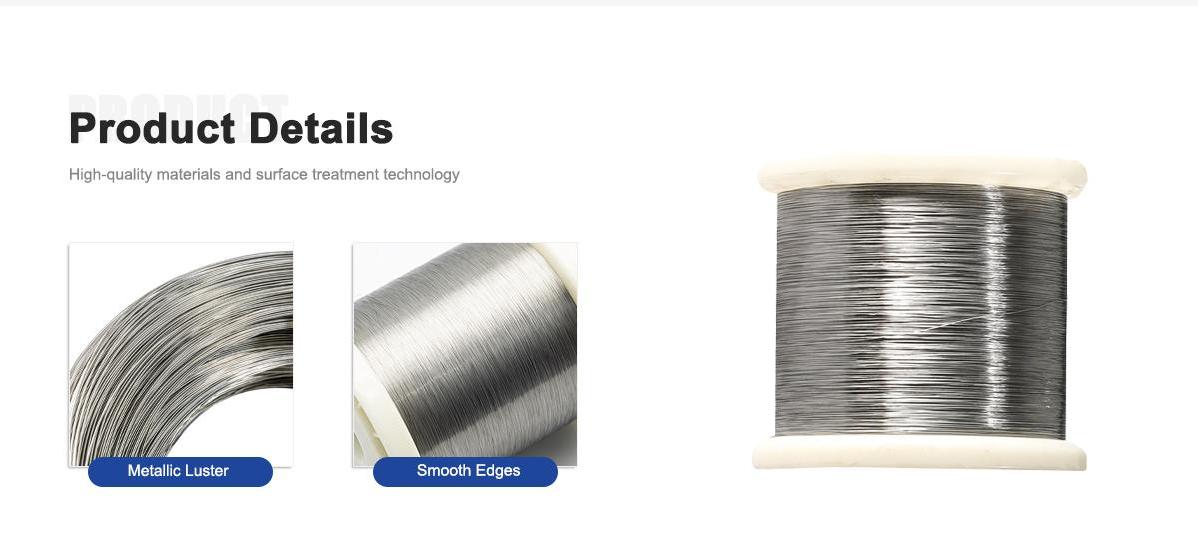
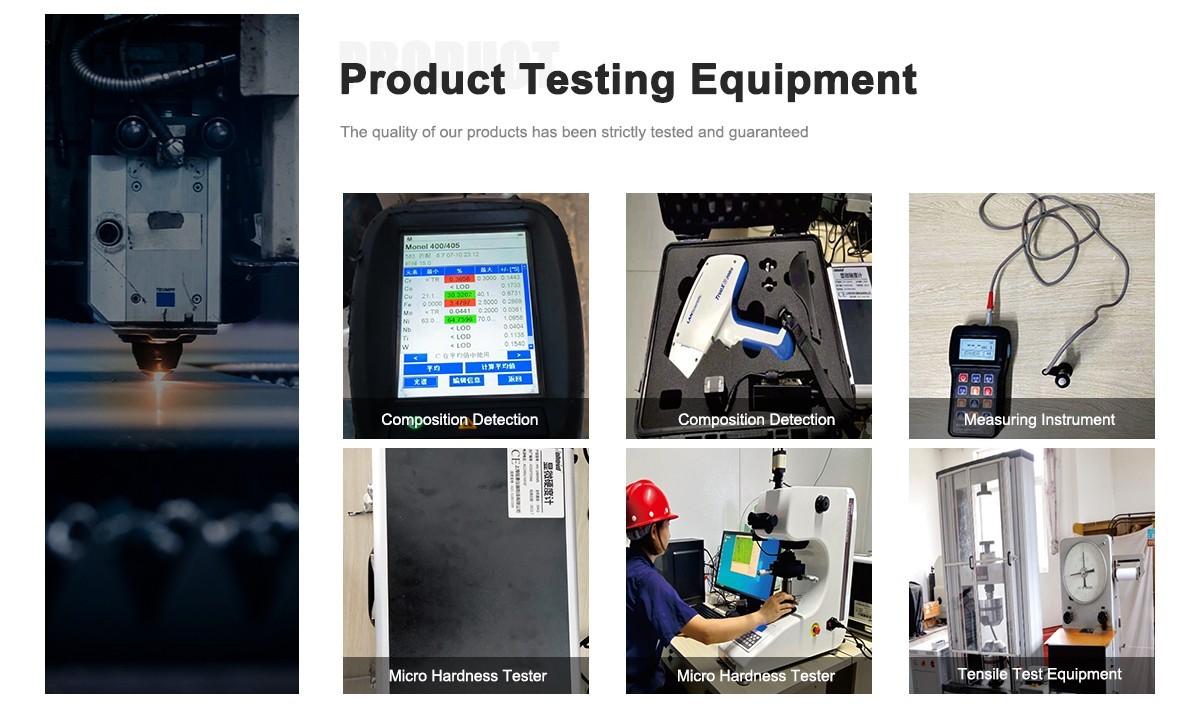
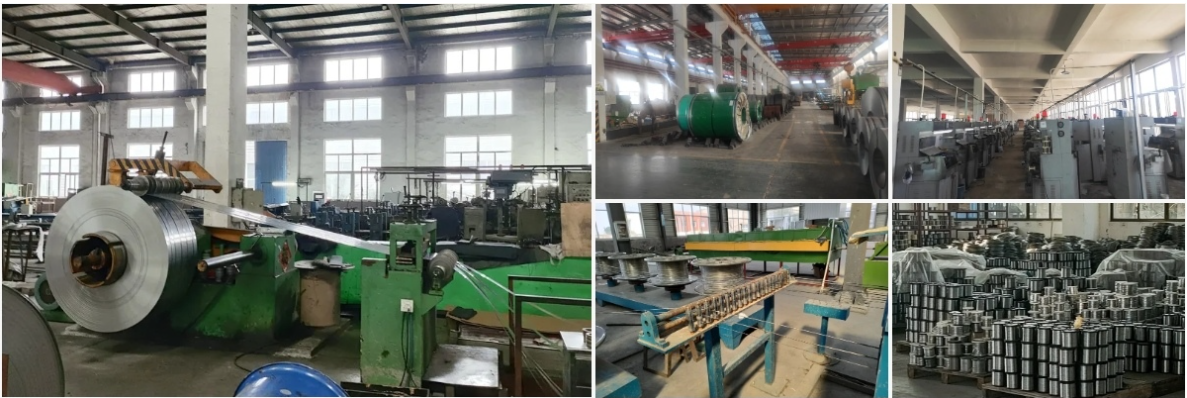
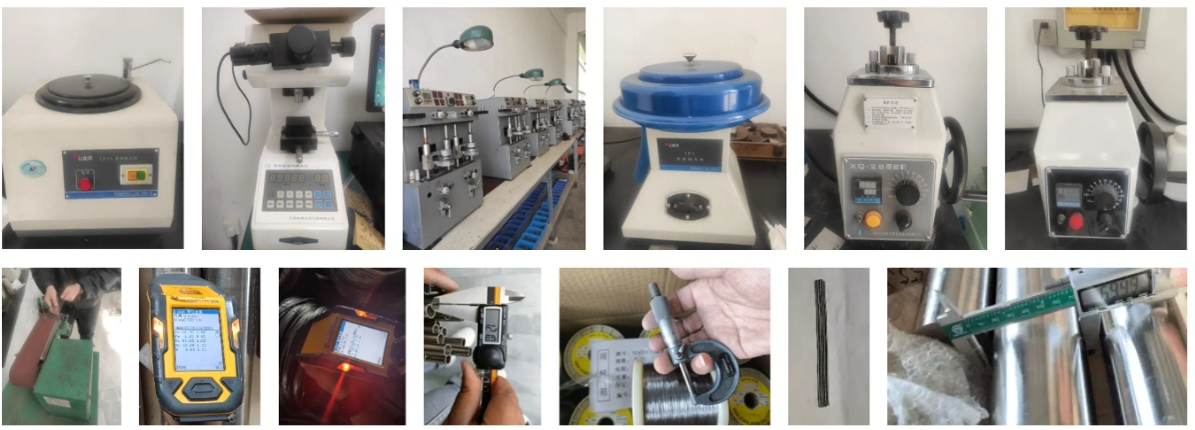
Our 12,000㎡ factory is equipped with complete capabilities for research, production, testing, and packaging. We strictly adhere to ISO 9001 standards in our production processes, with an annual output of 1,200 tons. This ensures that we meet both quantity and quality demands. Furthermore, all products undergo rigorous simulated environment testing including high temperature, high pressure, and corrosion tests before being dispatched, ensuring they meet customer specifications.For all our clients, we offer timely and multilingual after-sales support and technical consulting, helping you resolve any issues swiftly and efficiently.
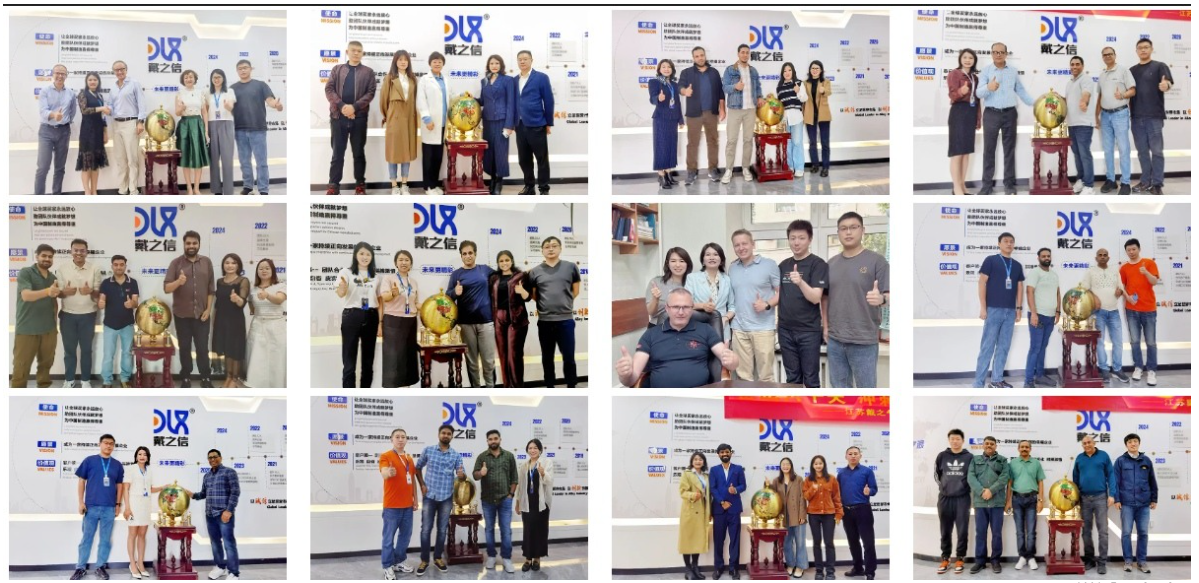
Client Visits
Building Stronger Partnerships
We support all kinds of testing:

FAQs
What exactly is Nichrome NiCr Resistance Heating Wire made of?
Our Nichrome wire, specifically the Alloy 80/20 version compliant with ASTM B344 and DIN 17470, is a high-performance blend of 80% nickel and 20% chromium. This combo gives it killer heat resistance and oxidation protection, making it perfect for tough environments without breaking a sweat.
What are the key properties that make this wire stand out for heating applications?
It boasts a maximum operating temperature of up to 1200°C, super high electrical resistivity (around 1.09 ohm-mm²/m), and excellent ductility for easy forming. Plus, it's non-magnetic and welds like a dream, so you get reliable performance in everything from industrial furnaces to DIY projects.
Where can I use DZX's Nichrome wire in real-world setups?
You'll find it shining in heating elements for toasters, hair dryers, kilns, and even medical devices. It's a go-to for 3D printers, automotive sensors, and aerospace components where precise, even heat is non-negotiable.
How does Nichrome wire handle high-heat exposure over time?
Thanks to its chromium content, it forms a tough oxide layer that shields it from further oxidation, extending lifespan way beyond basic alloys. In tests, our wire holds up for thousands of hours at 1000°C without degrading—ideal for continuous-use scenarios.
What's the latest on industry trends for resistance heating wires like this?
The market's booming with a projected CAGR of 5.2% through 2033, driven by demand for energy-efficient solutions in renewables and EVs. We're seeing more integration in smart home tech and green manufacturing, where Nichrome's efficiency keeps energy waste low.
Can I customize the diameter or length of your Nichrome wire?
Absolutely— we offer gauges from 20 AWG up to finer specs, with lengths tailored to your needs. Whether it's for a small prototype or bulk industrial runs, our Alloy 80/20 meets ASTM B344 precision every time.
How does Nichrome compare to other resistance materials in terms of cost-effectiveness?
It's a sweet spot: more affordable than platinum-based options but way more durable than pure iron wires. Over time, the reduced downtime and longer cycles make it a no-brainer for high-volume ops, saving you bucks in the long haul.
What certifications should I look for to ensure quality in Nichrome wire?
Stick to ASTM B344 for U.S. standards and DIN 17470 for European compliance—these guarantee consistent composition and performance. At DZX, every spool is tested to these specs, so you get peace of mind without the guesswork.


